A bandana is a deceptively simple square of cloth that gets ordered for wildly different jobs: knotted on a dog at a Saturday market, handed out by the hundred at a 5K, tied around a groomsman’s neck, or stuffed in a work glove to keep grit out of a collar. The square looks the same in every case, but the right fabric, size and finish are not the same at all. If you have already sorted out sizes and print methods and just need to know which bandana fits which purpose, this is a selection guide organized by the job rather than by the spec sheet.
Start with the job, then pick the bandana
Three decisions do most of the work: the fabric, the finished size, and the print method, and the job dictates all three. Fabric ranges from smooth cotton poplin, which is lightweight and tightly woven for detailed prints, through heavier cotton twill with its durable diagonal weave, to polyester that holds dye so well that neons and bright reds stay vivid, and blends that split the difference. Finished size runs from small squares around eighteen to twenty-two inches up to the standard adult twenty-seven-inch bandana, with dog sizes measured differently again. Print method is the last lever: solid spot-color designs in bulk lean toward screen printing, while full-color or photographic artwork, especially on polyester, is the domain of digital and dye-sublimation printing. Get the job clear first and these three choices tend to resolve themselves.
Dog bandanas: size to the neck, not the dog
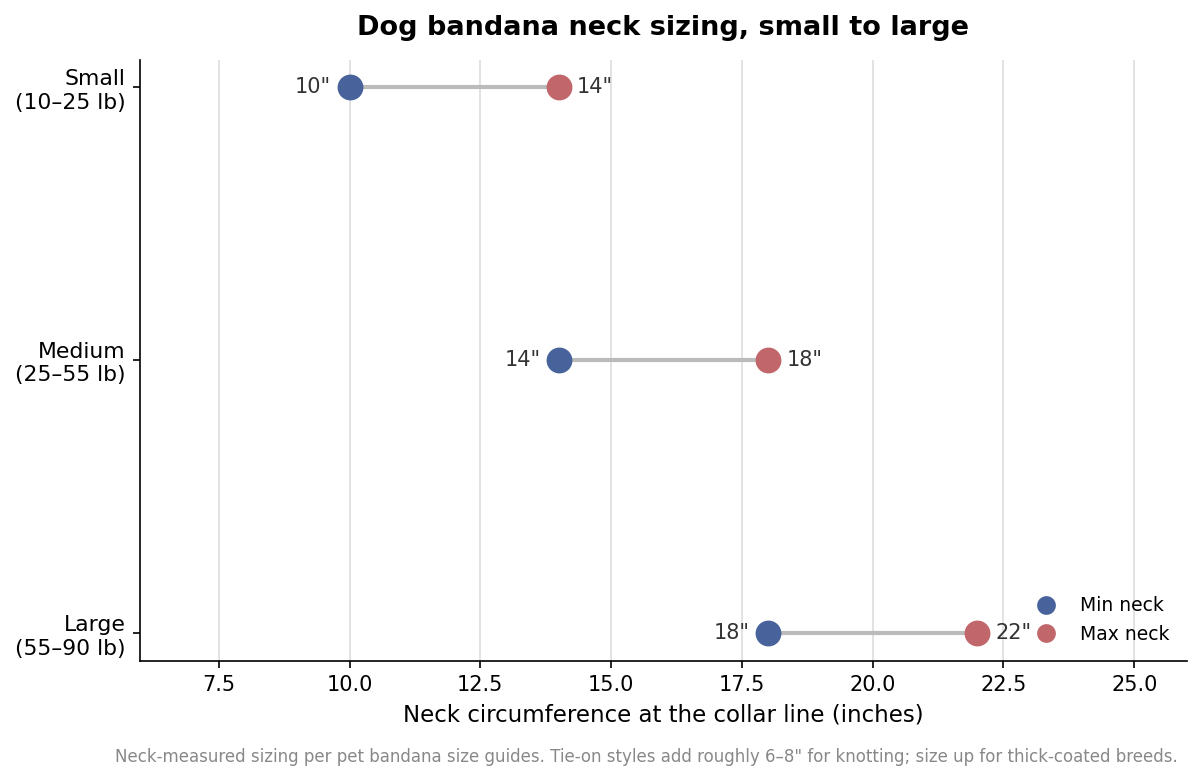
Dog bandanas are the one use where standard human sizing fails you, because a dog is fitted by neck circumference rather than by a finished square. Measure around the thickest part of the neck where the collar sits, and apply the two-finger rule: if you cannot slide two fingers between the tape and the coat, it is too tight. As a working guide, a small dog of roughly ten to twenty-five pounds measures about ten to fourteen inches at the neck, a medium dog of twenty-five to fifty-five pounds runs fourteen to eighteen inches, and a large dog of fifty-five to ninety pounds falls between eighteen and twenty-two inches. Two construction styles follow from that measurement. A tie-on bandana needs the neck measurement plus roughly six to eight inches of extra fabric so there is enough to knot, while an over-the-collar style should cover only about half to two-thirds of the collar’s length so it does not block the leash clip. One caveat for the fluffy breeds: an eighteen-inch bandana can vanish into a thick coat, so size up when the fur is deep.
Weddings, parties, and favors: looks over toughness
Event bandanas are seen at close range and rarely abused, so the priorities flip toward appearance and hand-feel rather than ruggedness. For weddings, welcome bags, and party favors, a soft cotton poplin takes fine detail beautifully and feels good against skin, which matters when guests actually wear the thing rather than pocket it. A smaller finished size around twenty-two inches reads as a tasteful accent and costs less than a full-size square, while the standard twenty-seven-inch bandana gives more room for an all-over pattern or a monogram. Because these runs prize crisp, often multi-color artwork and are usually modest in quantity, digital printing on a smooth cotton is frequently the natural fit. Durability barely enters the conversation; a favor that looks refined in a photo has done its job.
Teams, fans, and promo giveaways: color and cost
Giveaways live and die on bold color and unit price. When you are ordering in the hundreds or thousands for a game day, a race, or a trade-show table, polyester earns its place because it holds saturated dye so well that team reds and highlighter-bright promo colors stay punchy, and it costs less than cotton at volume. The trade-off is breathability and a slightly synthetic hand, which almost never matters for a spirit rag waved in the stands or knotted on a wrist. For a simple one or two color logo produced in quantity, screen printing keeps the per-piece cost down; when the design is full-color or photographic, dye-sublimation on polyester delivers edge-to-edge color that a screen cannot match. The guiding principle for promo is to spend on visual impact and quantity, not on a premium fabric nobody will scrutinize.
Workwear and outdoors: fabric that earns its keep
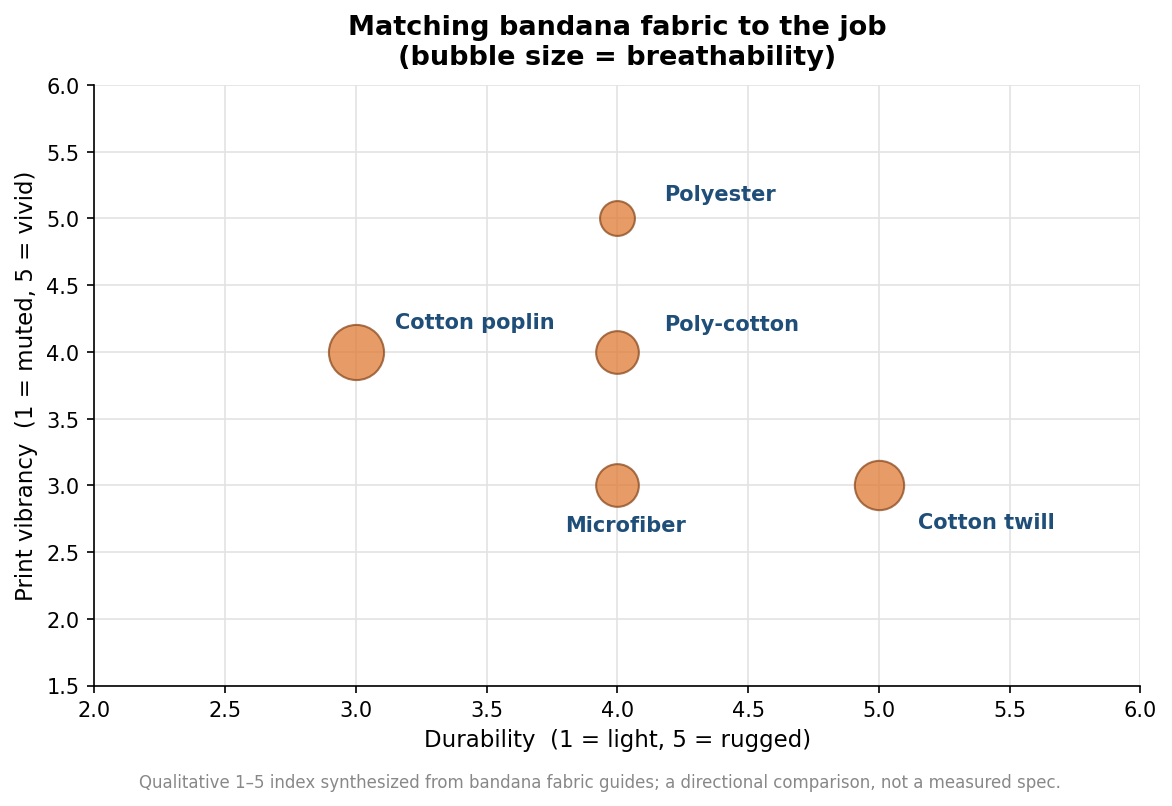
When the bandana has an actual function, fabric moves back to the front. For dusty jobs, farm and shop work, or anything where the cloth gets tied, soaked and wrung out repeatedly, cotton twill and cotton-poly blends hold up best; the twill’s tighter, heavier weave resists wear, and blends at fifty-fifty or sixty-five-thirty shrink less than pure cotton while staying reasonably soft. For running, hiking, and hot-weather sport, a microfiber or performance-poly bandana that wicks moisture and dries fast beats heavier cotton that stays wet against the skin. Retail and everyday-carry sit in the middle, where classic one-hundred-percent cotton remains the default for its breathability and familiar feel. Across all of these, decide how the piece will be laundered before you finalize the fabric, since a work rag that gets washed weekly has very different demands from a keepsake that gets folded in a drawer. Match the cloth to the abuse it will take, and the bandana quietly does exactly what it was bought to do.